
Nobody warned me that a Roblox creature game would eat six months of my free time.
I stumbled into Creatures of Sonaria completely by accident. My younger sister was playing it on her tablet and I looked over her shoulder, genuinely impressed by how detailed the creatures looked. I downloaded it that same afternoon thinking it’d be a casual thing — play for twenty minutes, pet some dinosaur-looking animals, move on.
That was not what happened.
CoS, as the community calls it, is one of the deepest creature-collection and survival games on Roblox. The gacha system, the breeding mechanics, the trading economy, the PvP — each layer you peel back reveals another layer underneath. And there’s almost no in-game explanation for any of it. You’re just dropped into a world as a small creature and left to figure out why everyone around you seems to know exactly what they’re doing.
This guide is everything I had to learn the hard way, compiled so you don’t have to spend three weeks confused in the server like I did.
Understanding How Creatures of Sonaria Actually Works
Before any tier list makes sense, you need a quick grasp of the game’s structure because it’s genuinely different from most Roblox games.
You don’t control a human character. You are a creature. You eat, drink, grow, survive other players, and interact with the world entirely as the creature you’re currently playing. Each creature you own has its own stats — health, damage output, speed, stamina, and size — and those stats define what that creature is useful for.
Creatures come from the Gacha system, which uses a currency called Mush (earned through playing) or Robux (real money) to roll for new creatures. Creatures have rarity tiers: Common, Uncommon, Rare, Very Rare, and Premium (Robux-exclusive). There are also Event creatures that appear during limited seasonal periods and become extremely valuable in the trading economy afterward.
Trading is arguably the most important mechanic once you’ve been playing for a while. Players trade creatures with each other constantly, and the “value” of a creature is determined by community consensus — how rare it is, how useful it is in PvP, how good it looks (yes, aesthetics matter for trading value in this game), and whether it’s still obtainable or long-retired.
Keep all of that in mind as we go through the tiers, because a creature’s tier placement means something different depending on whether you care about PvP performance, trading value, or just casual gameplay.
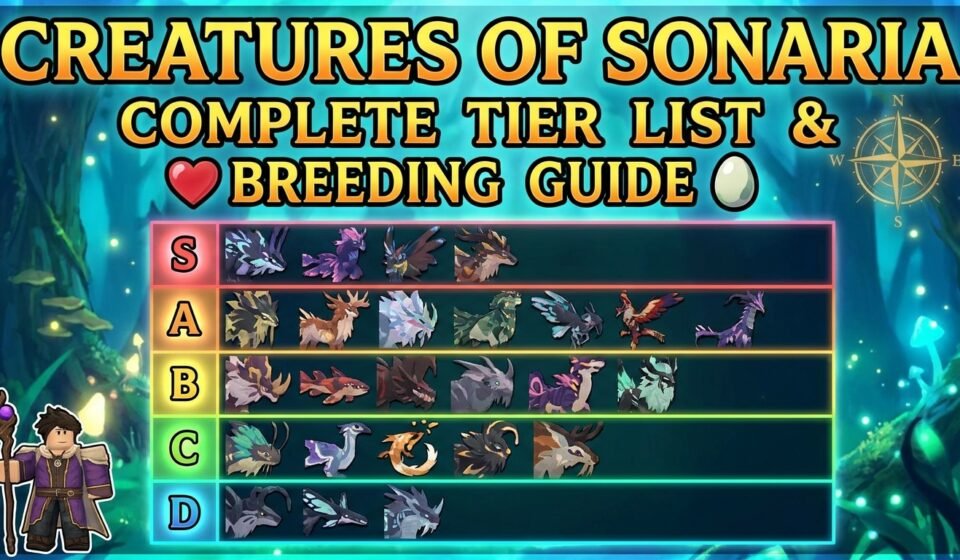
The Tier List — Breaking It Down Honestly
I’m going to separate this into two views: PvP/Gameplay Tier and Trading Value Tier. These overlap sometimes but definitely not always. Some creatures are monsters in combat and worth almost nothing in trades. Others are mediocre to play but incredibly valuable to own because they’re rare or retired.
S-Tier — PvP & Survival (The Creatures You Actually Fear)
These are the creatures that make you nervous when you see them in a server. High health pools, strong damage, good speed, or some combination of all three.
Ghorah A large, heavily built creature with serious survivability. Ghorah’s combination of high HP and respectable damage output makes it a nightmare in open-world PvP. It’s not the fastest creature in the game, but it doesn’t need to be. If you’re in its range, you’re going to feel it. I had a fully grown Ghorah territory-claim a watering hole in my server for an entire session and nobody could do anything about it.
Sonar What Ghorah lacks in speed, Sonar makes up for in pure mobility and harassment potential. Sonar-type creatures are excellent at hit-and-run tactics — getting in damage and retreating before a larger creature can respond effectively. Great for experienced players who like an active, aggressive playstyle.
Kaiju-Class Creatures (Various) The community term “Kaiju” refers to the largest-tier creatures in CoS — massive, map-dominating animals that most players simply cannot engage with directly. Specific creatures in this size bracket vary by update, but if you’re playing a medium creature and a Kaiju walks toward you, you leave. Full stop. Getting to grow one of these is a late-game milestone that feels genuinely earned.
Event Exclusives (Retired Apex Types) Several limited-time event creatures were designed with above-average stats during their release windows and have since been retired from the gacha pool. If you encounter one of these in PvP, the player using it has either been playing for years or traded very well to get there.
A-Tier — Strong, Reliable, Accessible
These creatures won’t dominate a server the way S-tier can, but they’re genuinely solid picks that hold their own in most situations.
Mossmela One of the more beloved creatures in the CoS community — aesthetically beautiful (that mossy, forest-spirit look is genuinely stunning) and mechanically competent. Mossmela isn’t going to win every fight it picks, but it’s resilient and popular enough that you’ll see experienced players running it regularly. It’s also one of the easier high-quality creatures to trade for, making it a realistic target for newer players.
Mid-Size Carnivores (General Category) CoS has a range of medium carnivore-type creatures that sit comfortably in A-tier for PvP. They deal enough damage to threaten most things their size, move quickly enough to chase or escape, and are obtainable enough that building experience on them is practical. If you’re brand new to PvP in CoS, learning on a solid A-tier carnivore will teach you more than struggling with a S-tier creature you don’t know how to use yet.
Aquatic Specialists Creatures built primarily for water play have a unique advantage: most land-based creatures are significantly weaker in deep water, so a strong aquatic creature in its home environment is functionally a tier higher than its stats suggest. If you spend a lot of time in CoS’s ocean areas, specializing in an aquatic creature can be surprisingly dominant.
B-Tier — Situationally Good, Great for Beginners
Solid creatures that don’t dominate but absolutely function. For newer players, starting in this tier is completely reasonable — these creatures teach you the game without the frustration of managing a complex high-tier creature’s needs.
Common and Uncommon Gacha Pulls Most of your early gacha pulls will land here, and that’s genuinely fine. Common creatures often have straightforward stat profiles — not exceptional anywhere, not terrible anywhere. Use them to learn server dynamics, eating patterns, water location habits, and how to avoid getting killed by the S-tier things wandering around.
Herbivores (Most Types) Herbivores in CoS are generally lower on the PvP tier — they’re not built for combat. But they’re often faster, better at escaping, and in a survival context (just trying to live your session without dying) they can be more practical than an aggressive carnivore that’s constantly picking fights it shouldn’t. The community sometimes underrates herbivore play.
C-Tier and Below — Worth Knowing About
Low-tier creatures aren’t necessarily bad — they’re just outclassed in most competitive contexts. For pure casual play, aesthetic enjoyment, or early learning, they’re fine. For trading, many of these hold minimal value unless they happen to be retired from the gacha pool (in which case rarity alone can push their trade value up regardless of stats).
Trading Value Tier — Separate Conversation
Here’s where things get interesting and often confusing for new players.
Retired event creatures sit at the top of trading value almost regardless of their actual stats. The logic is simple supply and demand — they can’t be obtained anymore, so anyone who wants one has to trade for it. The CoS community has built an entire economy around this.
The rough trading tier from most players’ consensus:
- God-tier trade value: Retired event exclusives, especially ones from early in the game’s history when the player base was smaller
- High trade value: Premium Robux creatures, Very Rare gacha pulls, older non-event retired creatures
- Mid trade value: Current Very Rare gacha creatures, well-rolled Rare creatures with good morphs
- Low trade value: Common, Uncommon, basic Rare pulls — these are what newer players typically have to offer
One thing I got wrong early on: I assumed a creature’s PvP strength translated directly to trade value. It doesn’t, reliably. Some S-tier PvP creatures are obtainable enough from the current gacha that they have surprisingly middling trade value. Meanwhile a completely retired C-tier-in-combat creature from two years ago might be worth several high-tier current creatures in trades simply because nobody can get it anymore.
Practical advice: Before you trade anything, check the CoS community Discord server and the fan-maintained wiki for current value guides. These update with the meta far faster than any article can. The Fandom wiki for Creatures of Sonaria is your best starting resource — bookmark it.
The Breeding Guide: What It Actually Does and How to Use It
Breeding in Creatures of Sonaria gets less attention in guides than it deserves, probably because it’s genuinely complex and the outcomes can feel random if you don’t understand what’s happening.
Here’s the core of how it works:
You need two creatures of compatible species. Not all creatures can breed with all other creatures. Generally, creatures within the same species group or closely related types can breed. The wiki has compatibility lists that are worth checking before you invest time in a pairing.
Morphs matter — a lot. CoS creatures can have different visual “morphs” — color variations and pattern differences that affect how they look but not their base stats. When you breed two creatures, the offspring can inherit morphs from either parent, producing offspring that might have a unique or rare morph combination. Rare morph combinations can be significantly more valuable in trades than standard-colored versions of the same creature.
The Mush cost. Breeding isn’t free. It costs Mush, the in-game currency, and the amount scales with the rarity of the creatures involved. Breeding two Very Rare creatures costs substantially more Mush than breeding two Commons.
Step-by-step: How to actually breed in CoS
- Make sure you own two compatible creatures of breeding age (fully grown, not juveniles)
- Open your creature inventory and select one of the two you want to breed
- Find a suitable breeding location in the map (some servers have designated breeding areas, or just find a quiet spot)
- Initiate the breeding interaction with a second creature you own — both need to be set to the same server session
- Confirm the Mush cost and proceed
- Wait for the egg to appear — egg incubation takes real time, so don’t expect an instant result
- Once hatched, the offspring creature appears in your inventory as a juvenile
- Grow the juvenile by playing it normally — it eats and drinks like any other creature until it reaches full size
What to breed for:
- Rare morph combinations — if both parents have uncommon color patterns, there’s a chance the offspring inherits a mix that’s unique. These can be very tradeable
- High-tier creature offspring — breeding two Very Rare or Premium creatures gives you a third creature of that line without spending on gacha
- Personal collection building — some players just like having multiple versions of a creature they enjoy playing
What NOT to do: Don’t spend significant Mush breeding Common creatures expecting the offspring to somehow be more valuable. Offspring rarity is capped by the parent rarity in most cases — Common parents produce Common offspring, with morph variation being the only real variable worth chasing at that level.
Mistakes I Made That You Shouldn’t
Trading away a retired creature I didn’t realize was retired. I traded an older event creature I’d gotten from a friend for a “better stats” current creature. Months later I saw someone in the trading hub valuing that same retired creature at multiple Very Rares. I had no idea what I’d given up. Lesson: check trade values before the trade, not after.
Growing creatures in dangerous servers without understanding territory. Some servers have organized player groups that treat certain map areas as their territory and will actively hunt creatures that enter. I grew a mid-tier creature to full size only to immediately lose it to a coordinated group camping a resource area. Now I grow valuable creatures on less populated servers.
Spending Mush on gacha before understanding the rates. The CoS gacha rates for Very Rare and Premium creatures are genuinely low. Spending all your accumulated Mush on gacha rolls hoping for a specific top-tier creature is almost always a bad investment compared to trading for it directly. Save Mush strategically.
Ignoring the social side entirely. CoS is genuinely more enjoyable with a group. Joining a community Discord or finding a group of regular players to run servers with opens up cooperative gameplay, safer growing sessions, and access to experienced traders who can mentor you on values. Solo play in this game has a ceiling.
Neglecting stat growth timing. Creatures grow through juvenile and adolescent stages before reaching adult size. During growth phases, they’re vulnerable. I got into the habit of growing creatures during off-peak server hours — late night or early morning — to reduce the chance of running into aggressive players while my creature was at its most vulnerable.
Resources Worth Bookmarking
The Creatures of Sonaria Fandom Wiki is genuinely well-maintained by the community and tracks creature stats, gacha rates, breeding compatibility, morph catalogues, and event history. It’s the single most useful reference you’ll use.
The official CoS Discord server has trading channels, value guides maintained by veteran players, and announcements about upcoming events and gacha pool changes. For anyone serious about the trading side of the game, the Discord is non-negotiable.
Several dedicated CoS YouTube channels post regular gacha opening videos and trading tier list updates — useful for getting a feel for current meta values without having to parse spreadsheets.
The Part Nobody Tells You When You Start
Creatures of Sonaria has a learning curve that feels steep at first because almost nothing is explained in-game. You’re expected to figure out the economy, the breeding system, the tier meta, and the server social dynamics through exploration and community.
That’s frustrating for about two weeks, and then it becomes one of the things that makes the game feel rewarding when it clicks. Trading your first rare creature for something valuable, growing your first Kaiju-class creature to full size without losing it, getting a genuinely rare morph combination from a breeding session — these are moments that land harder because you actually had to work to understand what you were doing.
The tier list will keep shifting as new gacha seasons launch and event creatures come and go. What stays consistent is understanding why things have value — rarity, retire status, aesthetics, PvP utility — and using that framework to make your own assessments when lists go stale.
Go slow. Trade carefully. Check the wiki constantly. And maybe don’t look over your sister’s shoulder at new Roblox games unless you’re prepared to disappear into them for half a year.